I have gradually become clear that I want to continue developing towards character design, especially character design rooted in Chinese cultural contexts. This direction was not something I decided only at the end of this project. It has been present in my creative practice for a long time. I have always been interested in Chinese classical literature, folklore, religious sculpture, opera, and traditional visual symbols, and I have been trying to translate these references into contemporary character design.
In Soul Remnants, this direction became clearer. Although my role in the project included scriptwriting, storyboarding, visual style design, and parts of 2D production, I was still most interested in how character design could serve the story. The protagonist, Yousheng, could not simply look “scary” or “strange”. His design needed to show that he is a person who has been misunderstood, used, and eventually replaced by the villagers. His silence, stiffness, emptiness, and lack of dignity all needed to be expressed through his body shape, movement, and visual presence. I also worked on the early design of main characters and key visual elements such as the statue and the chicken. These elements are not all main characters in a traditional sense, but they still carry narrative functions and help build the folkloric, grotesque, and ritual atmosphere of the film.
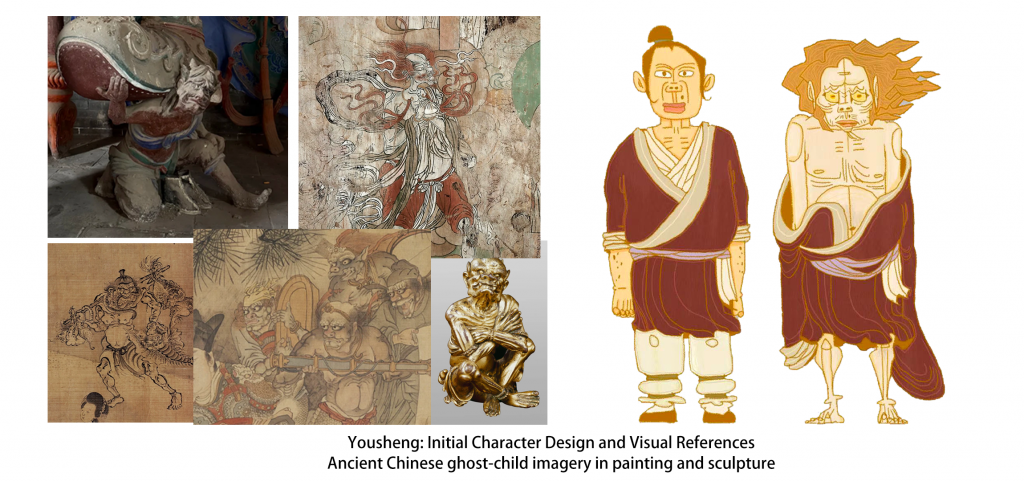
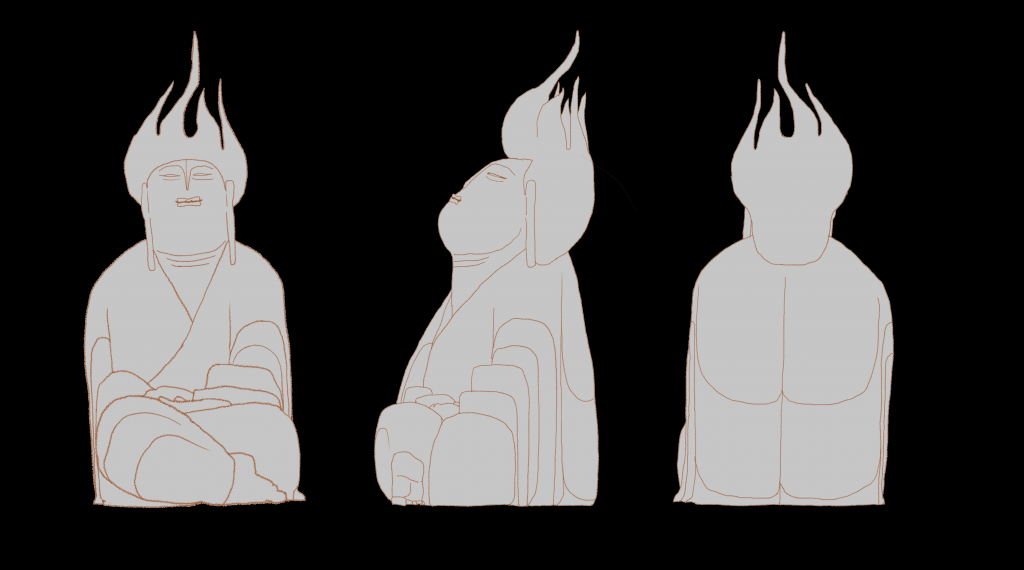
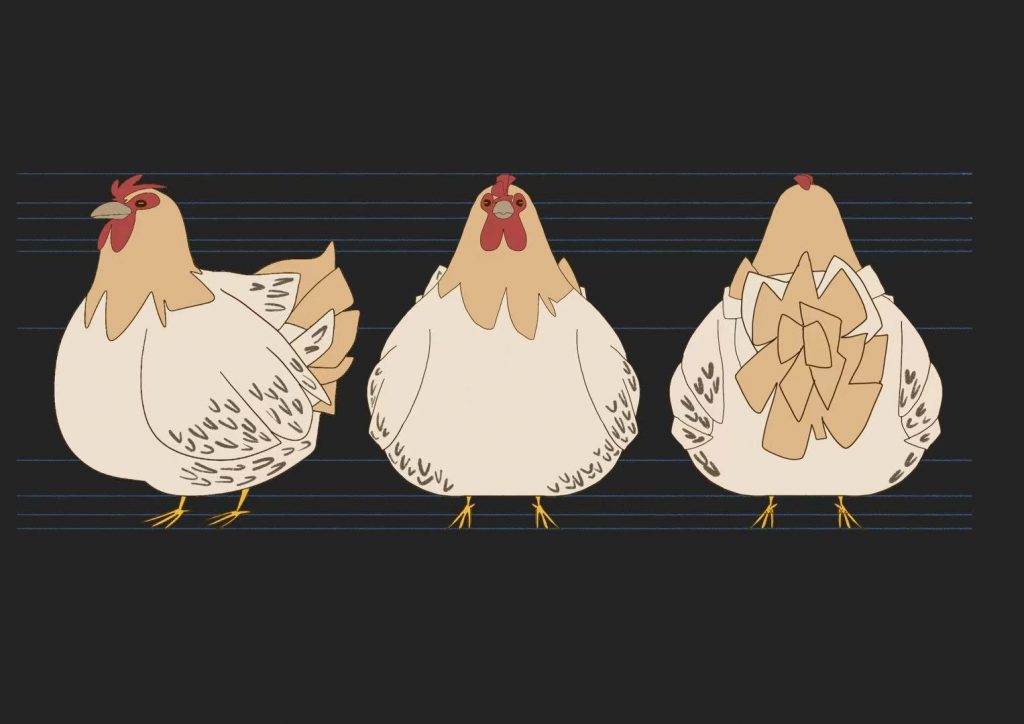
Outside this project, I have also been continuously researching Chinese-inspired character design. For example, I have been creating and expanding a character redesign series related to Journey to the West, and I have continued developing this direction since the year before last. This series is not a one-off exercise, but a long-term project through which I keep building research materials, adjusting my visual language, and improving my character design skills. In this process, I try to extract visual language from Buddhist sculpture, Dunhuang murals, gongbi painting, folk monster imagery, and traditional clothing, and translate these elements into new character designs.
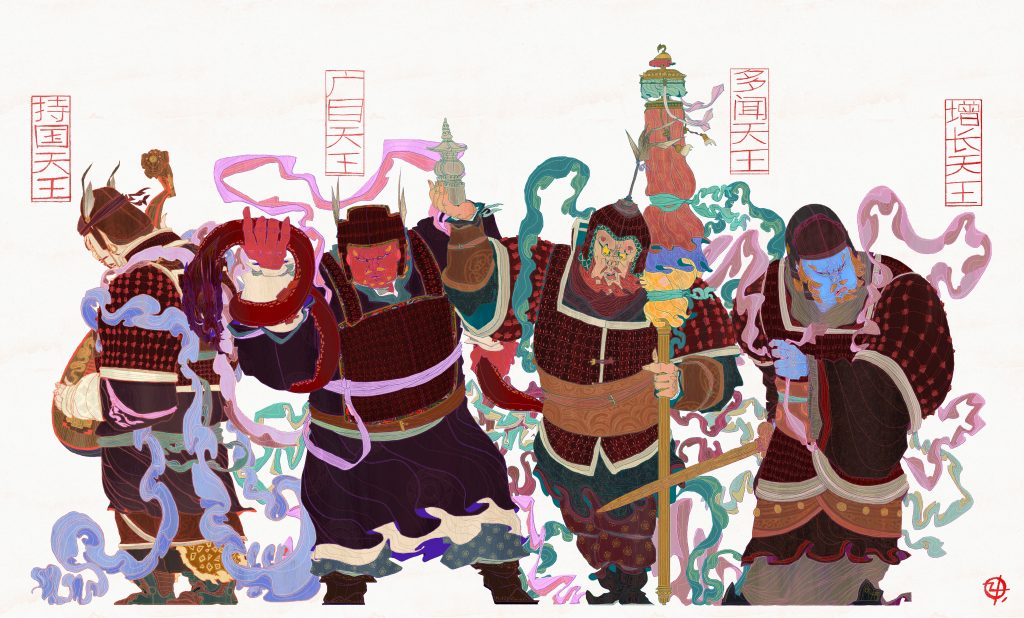
For me, Chinese-inspired character design is not simply about adding traditional patterns or ancient costumes to a character. It is about understanding the cultural logic, identity relationships, and narrative functions behind those visual symbols. Compared with when I first started this series, I now pay more attention to the overall system of character design, rather than only whether a single character looks visually attractive. I think more carefully about whether a character’s identity, origin, personality, body shape, costume structure, and props work together as a whole. A strong character design should allow the audience to sense the character’s background, personality, identity, and world through the design itself. By continuously developing this series, I am also improving my ability in visual research, visual translation, and character-based storytelling.
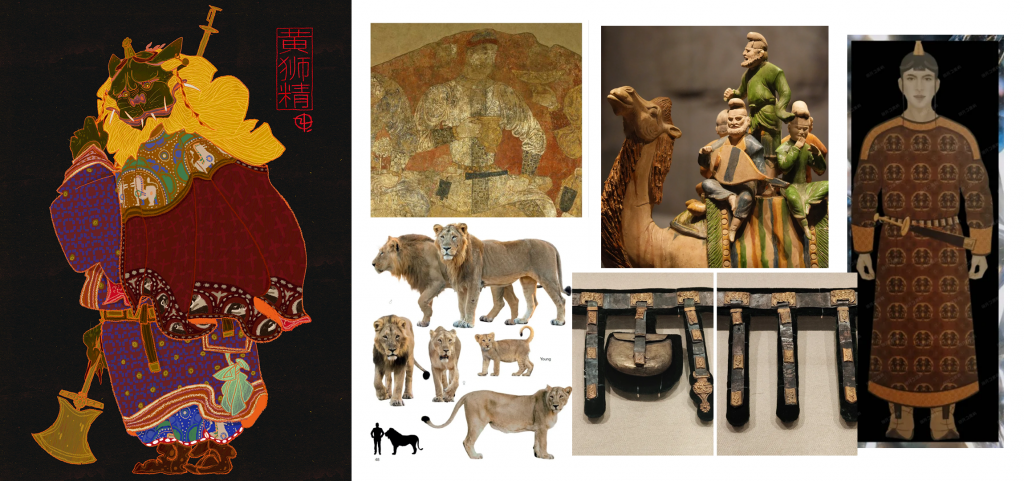
To prepare for this career direction, I am currently focusing on three areas. First, I will continue building my visual research archive, including religious sculpture, historical clothing, folklore images, and classical texts. Second, I will keep improving my skills in shape design, silhouette, costume structure, and prop design, so that my characters can become more distinctive and readable. Third, I will continue using animation projects to train the relationship between character design and storytelling, instead of treating character design only as static illustration.
Through Soul Remnants, I became more certain that I want to develop not just as an illustrator of characters, but as a character designer whose work can support narrative, worldbuilding, and cultural expression. This is the professional direction I want to continue pursuing.
Leave a Reply