In Soul Remnants, my role was mainly focused on visual style design, scriptwriting, and storyboard-based narrative development. Therefore, my reflection on skills is not only about software or individual production tasks. It is more about how to turn a complex idea into a clear animated narrative. To put it simply, this project taught me not only how to complete an animation, but how to tell a story clearly, and how to choose different storytelling methods for different kinds of stories.
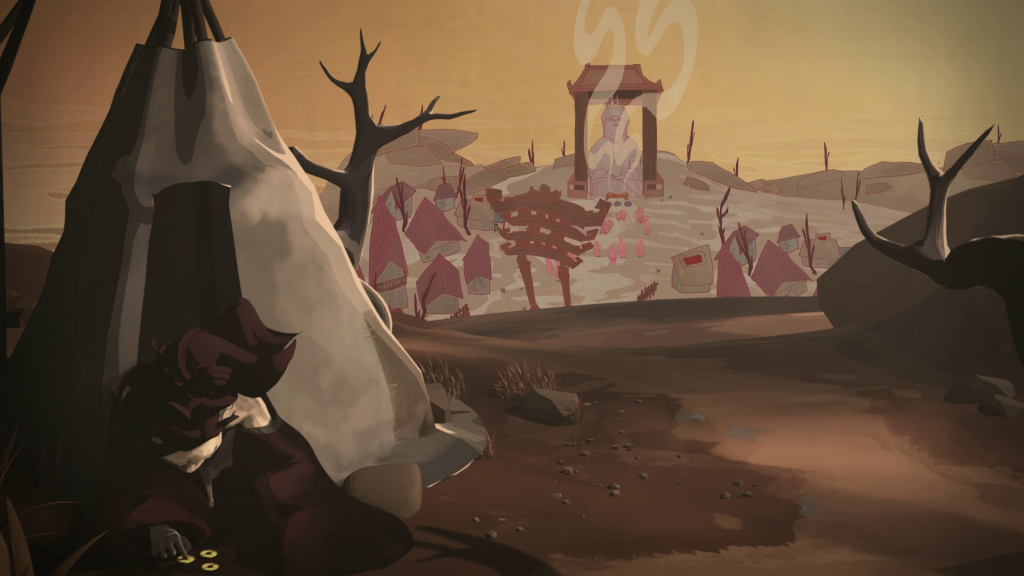
First, I developed my scriptwriting and narrative development skills. From the initial concept to the final version, the script went through many changes. In the early stages, the story could easily have become a direct tragedy about a man who comes back from death, gets misunderstood, and is hurt by the villagers. Later, I realised that the most important part of the film was not what Yousheng experiences, but how the villagers rewrite him, use him, and eventually replace him. Because of this, I did not give Yousheng more active expression in the later versions of the script. Instead, I reduced his space to explain himself and allowed the villagers’ reactions, rumours, rituals, and interests to push the story forward. This helped me understand that animation narrative does not always need to depend on the main character’s active decisions. Sometimes, a character’s silence and lack of response can also become a strong narrative force.
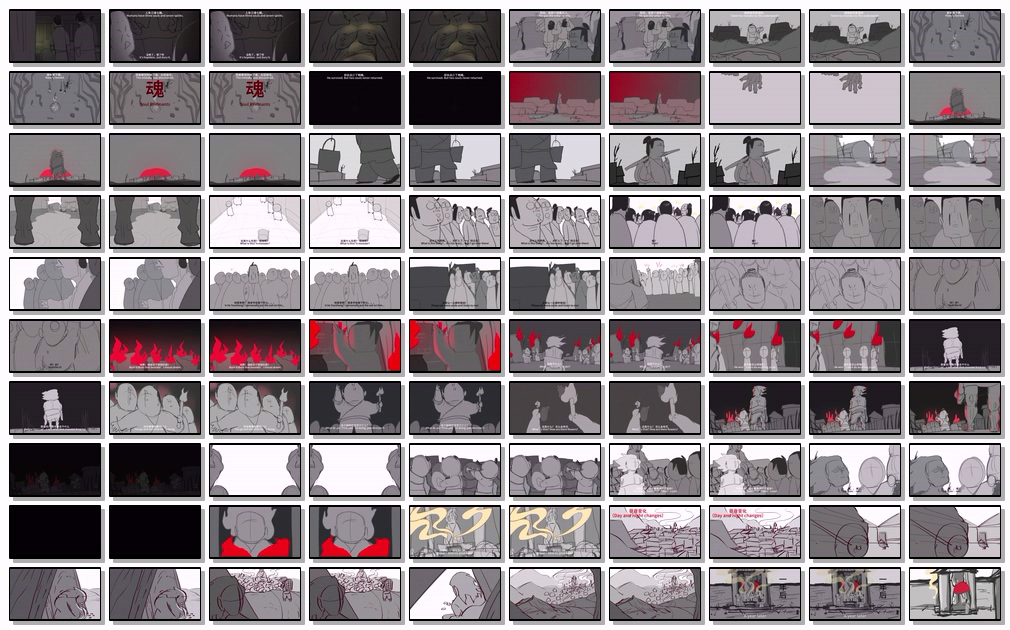
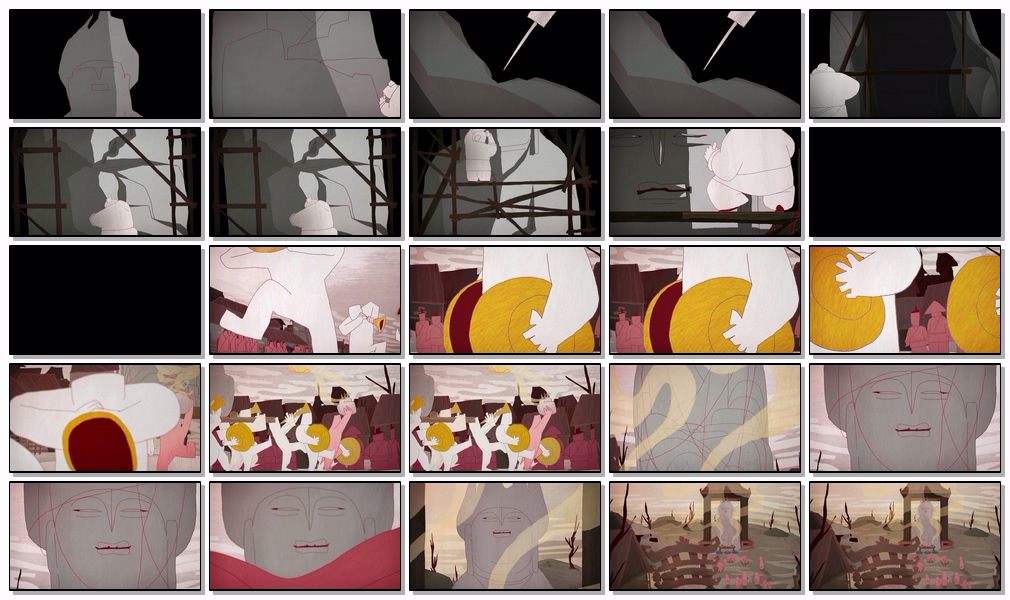
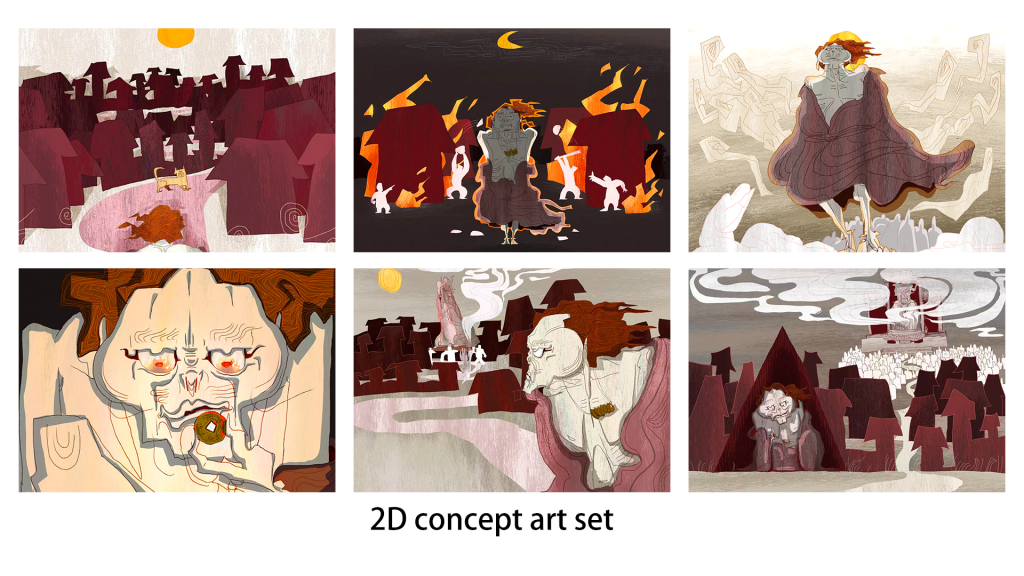
At the early stage of script development, I also created the first 2D art designs for the story. These images helped define the film’s rough, oppressive, rural, folkloric, and grotesque atmosphere. The later 3D modelling style was also developed from this early 2D visual direction. This made me realise that visual development is not separate from storytelling. Early visual designs can help clarify the tone, character texture, and worldbuilding of a project, and provide a clear direction for later production.
Second, I improved my visual storytelling skills. As the main visual style designer, I had to consider whether each shot, composition, character action, and visual symbol truly supported the theme, rather than only making the image look visually attractive. For example, in the sequence where Yousheng returns to the village, I used low angles, overhead shots, and group movement to show how the villagers’ emotions change from individual fear to collective anger. In the later part of the film, I also used the relationship between the statue, smoke, coins, and Yousheng to express symbolic transformation and the replacement of one medium by another. At first, coins are the weakest connection between Yousheng and human society. However, after the temple and statue are created, the coins no longer truly flow towards Yousheng, but towards the statue and the incense system. At the same time, smoke replaces coins as the new medium between the villagers and the “god”. This shift shows that Yousheng himself is no longer important. What matters is the sacred image that has been packaged, worshipped, and consumed by the villagers.
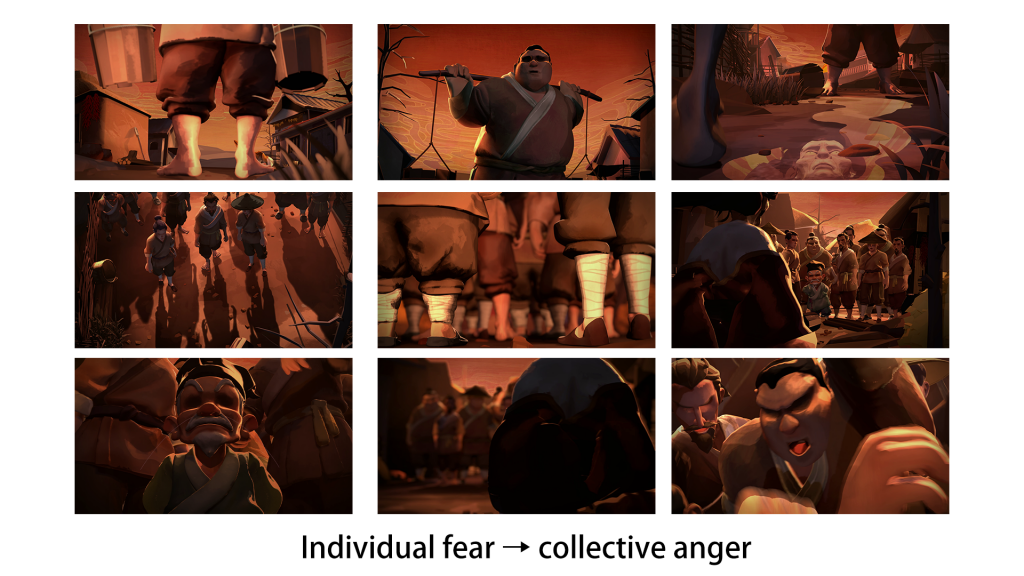
Finally, this project gave me a more practical understanding of script and storyboard development. In the past, I might have focused more on whether a single shot looked good or whether an image had strong visual impact. However, through Soul Remnants, I realised that the most important function of storyboarding is not to create isolated beautiful images, but to make sure the sequence of shots helps the audience understand the story clearly. Because the protagonist is silent, he cannot explain himself through dialogue or active behaviour. Therefore, I had to use the villagers’ reactions, camera angles, group actions, symbolic objects, and sound rhythm to help the audience understand how he is misunderstood, used, and replaced.
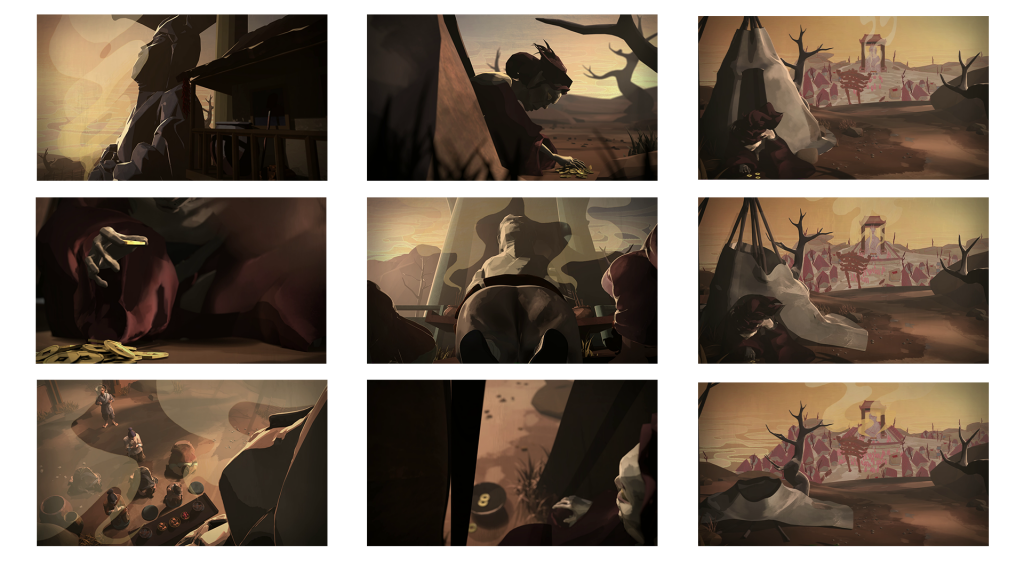
Therefore, this project helped me understand that the core of animation is not only about completing images, but about finding the most suitable way to tell a specific story within its limitations. For me, image, storyboard, sound, and timing are not separate production elements, but tools that work together to support the narrative. Through Soul Remnants, I learned how to identify what a story really needs, how to make a complex idea clear, and how to use different methods to tell different kinds of stories.
Leave a Reply